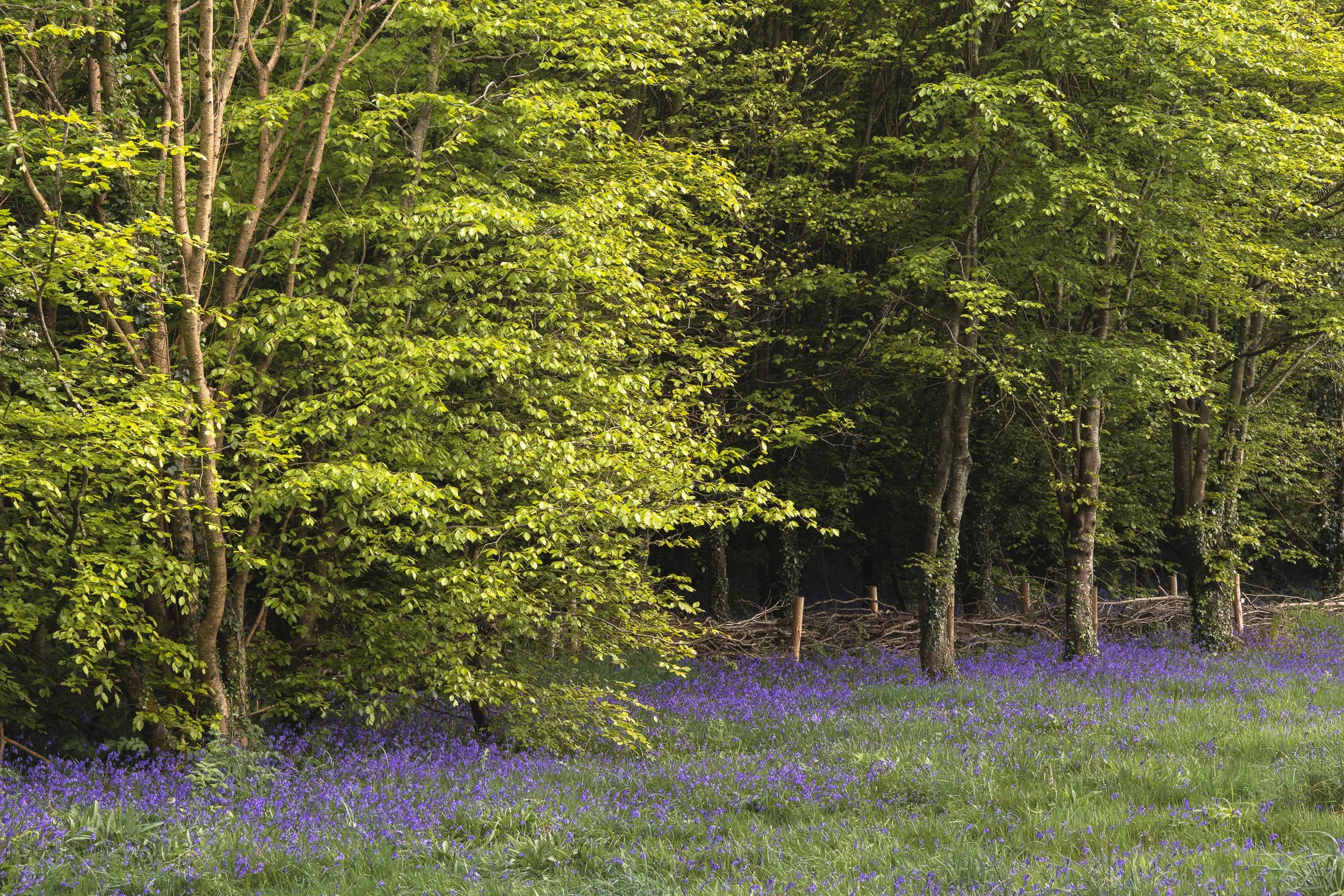
What happens when the photograph you’ve imagined doesn’t exist?
Every spring I see woodland photographs awash with bluebells. They have a timeless quality, the kind of image that quietly suggests you’ve stumbled upon a secret place. This year I wanted to make one of those photographs for myself.
There was only one problem. I’d never photographed bluebells before. I had no favourite location, little idea of the best time to visit and only a vague picture in my mind of what I hoped to create: sweeping carpets of blue beneath the woodland canopy.
I did quite a bit of research to identify suitable locations within an hour of our home in Donabate and Wexford. There were simply lots to choose from though Ballyfad woods just outside Gorey seemed a hot spot. Try as I might I couldn’t make the time to visit.
Tintern Abbey Woods
Instead I choose to visit Tintern Abbey. After speaking with a couple of locals, I discovered the stretch of woodland between the upper car park and the old graveyard was considered the best place to see the bluebells. A scouting visit confirmed they were just beginning to emerge, so I eagerly planned my return.
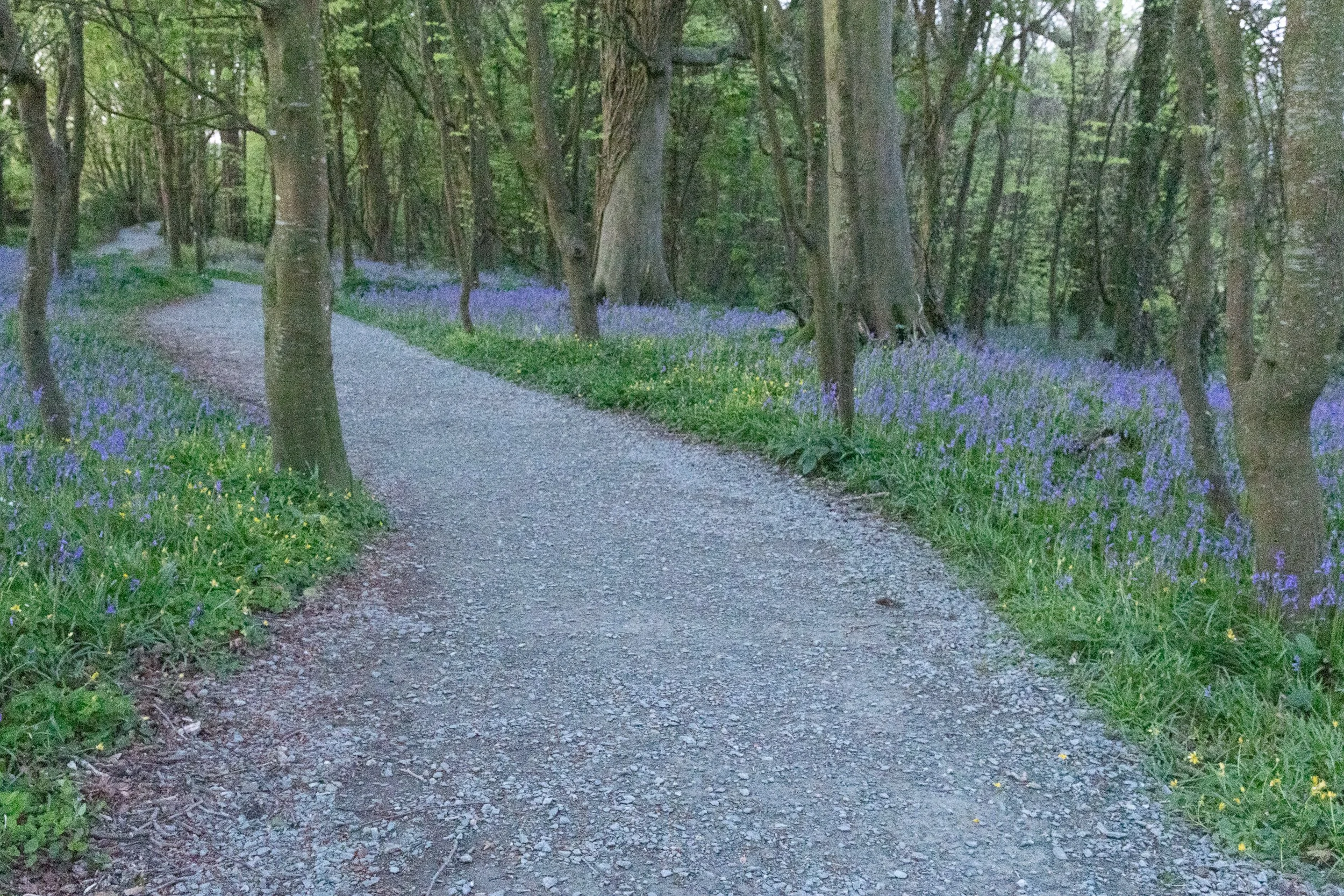
It’s a classic old Woodland though with lots of woodland clutter. On the day I visited I tired hard to simplify the scene though compositions that attracted my attention were weekend by gaps in the bluebells, patches of distracting light and awkward tree trunks.
Standing in a carpet of bluebells doesn’t automatically create a photograph; the visit became a reminder of just how difficult it can be to simplify a woodland scene.
it was a useful lesson. I’d spent weeks thinking about bluebells, but very little time thinking about woodland photography. The flowers were only one element. The light, the spacing of the trees, the background and the way everything came together mattered just as much.
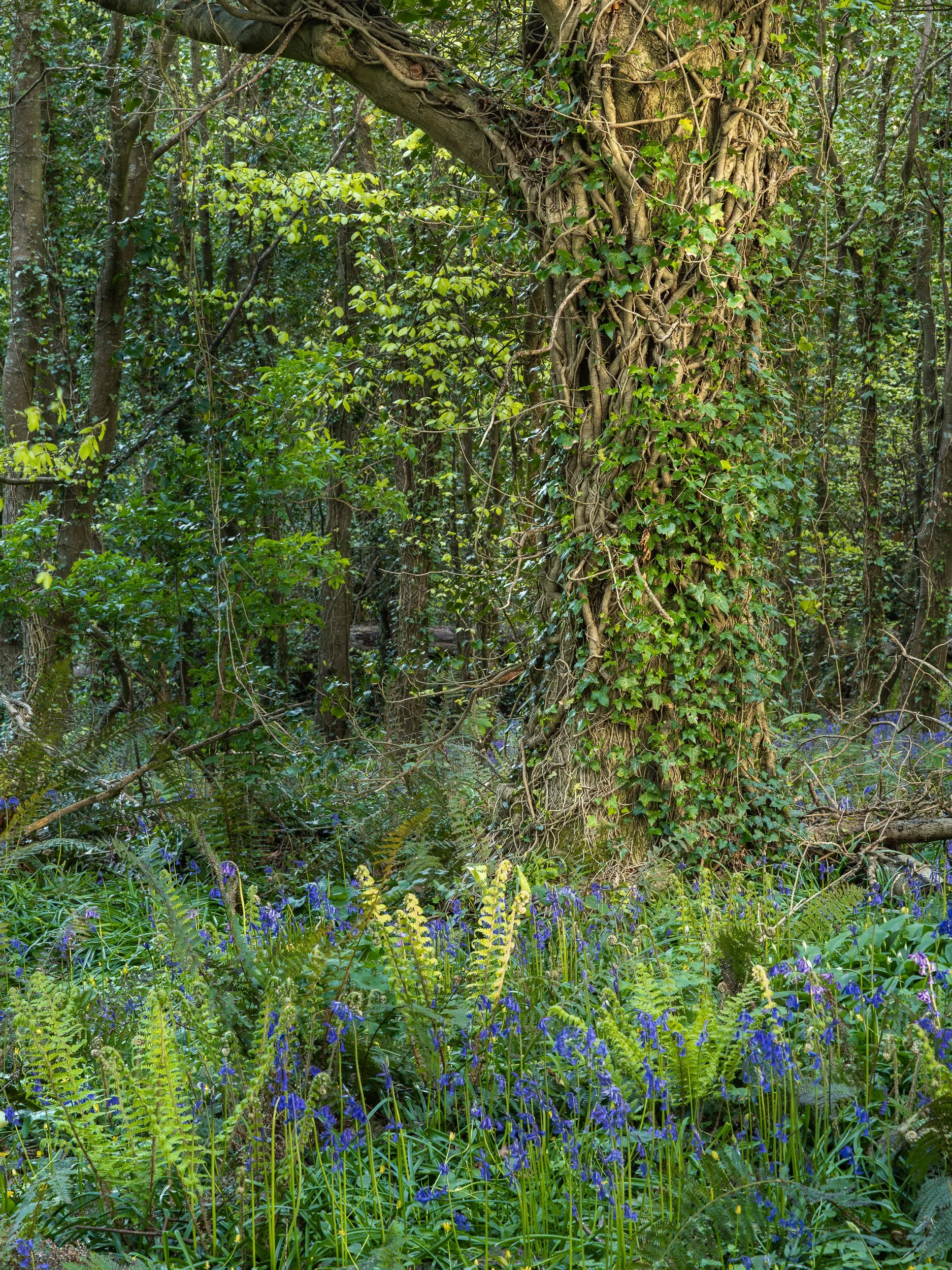
Yet Tintern had another gift to offer. The woodland floor was also filling with wild garlic. Instead of continuing to chase an image that wasn’t there, I began looking for quieter compositions.
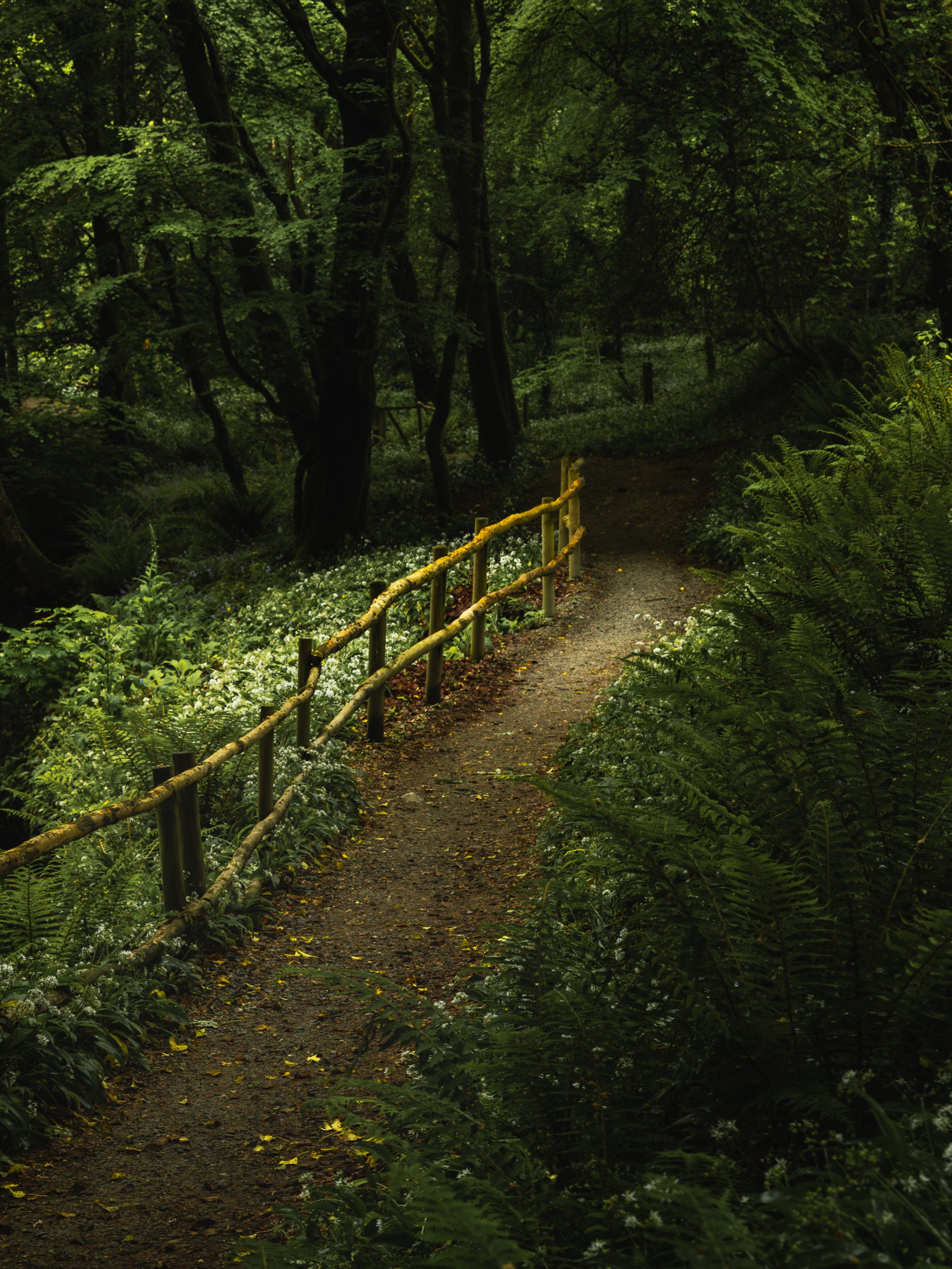
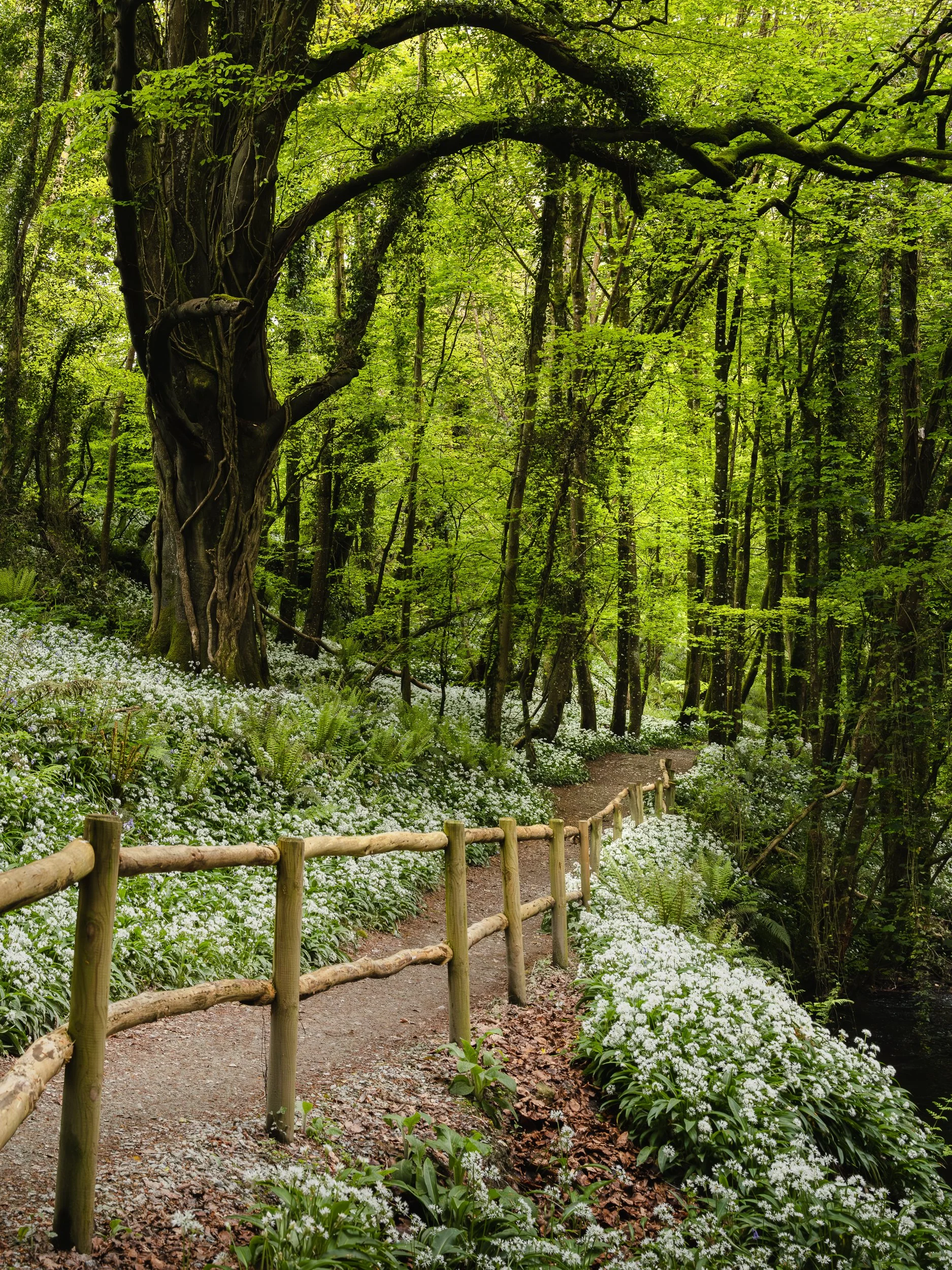
I was really pleased to come away with a couple of pleasing images from that visit.
Discovering Johnstown as a blue bell location
A few days later, while walking the dogs at Johnstown Castle, I wasn’t really expecting another opportunity. The camera was with me—as it usually is—but I wasn’t searching in quite the same determined way. Prior to this visit I hadn’t realised the staff at the location have an ongoing project to plant thousands of bulbs and their efforts were being rewarded.
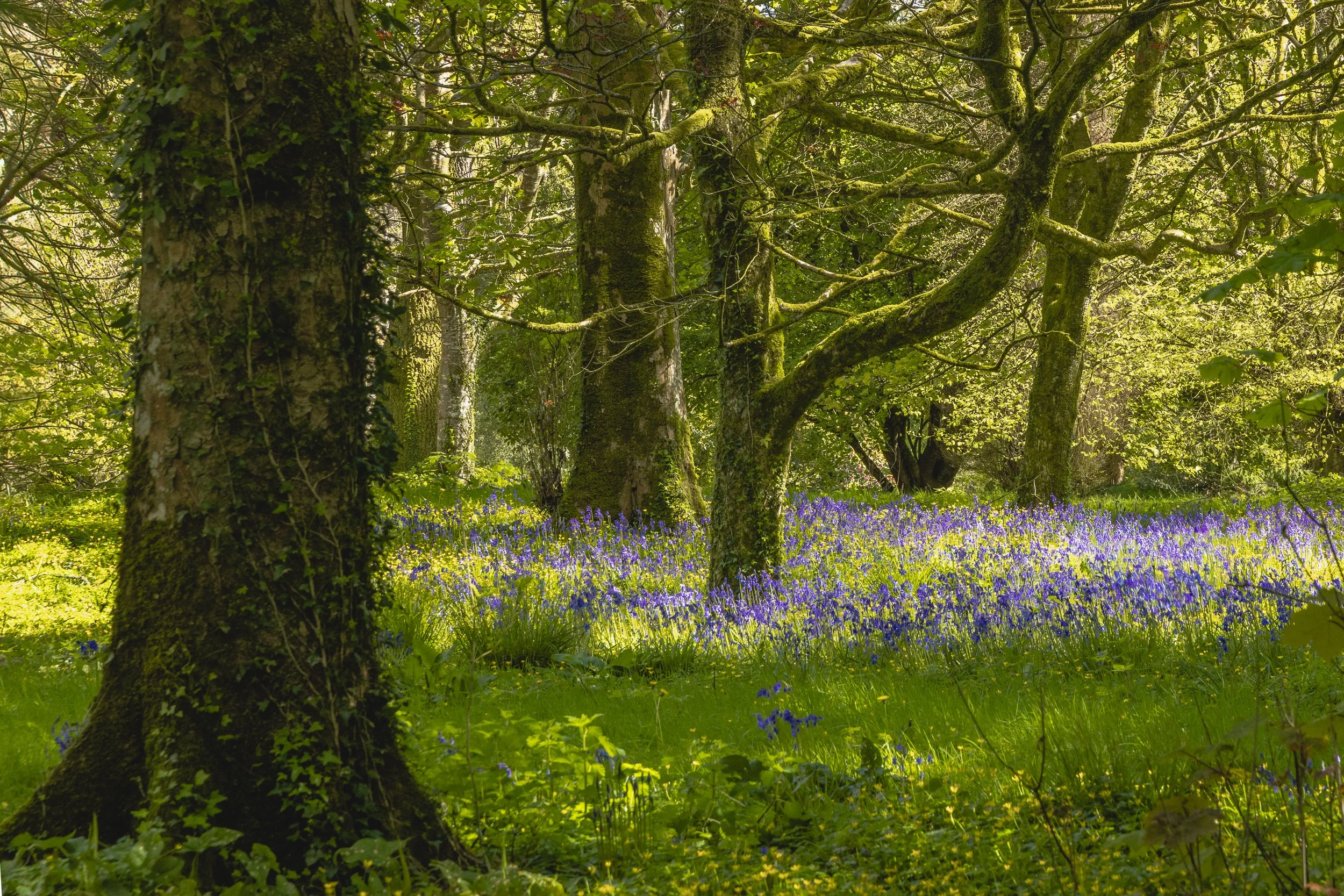
I was thrilled to see so many bluebells and as we turned a corner a familiar twisted tree looked very different in the presence of the bluebells. Seeing the opportunity I spent some time framing a composition. The day was overcast and the light wasn’t optimal but I did make some images I was satisfied with.
Returning to Johnstown
Returning over the following days, and letting go of my expectations, opened the door to a number of other compositions.
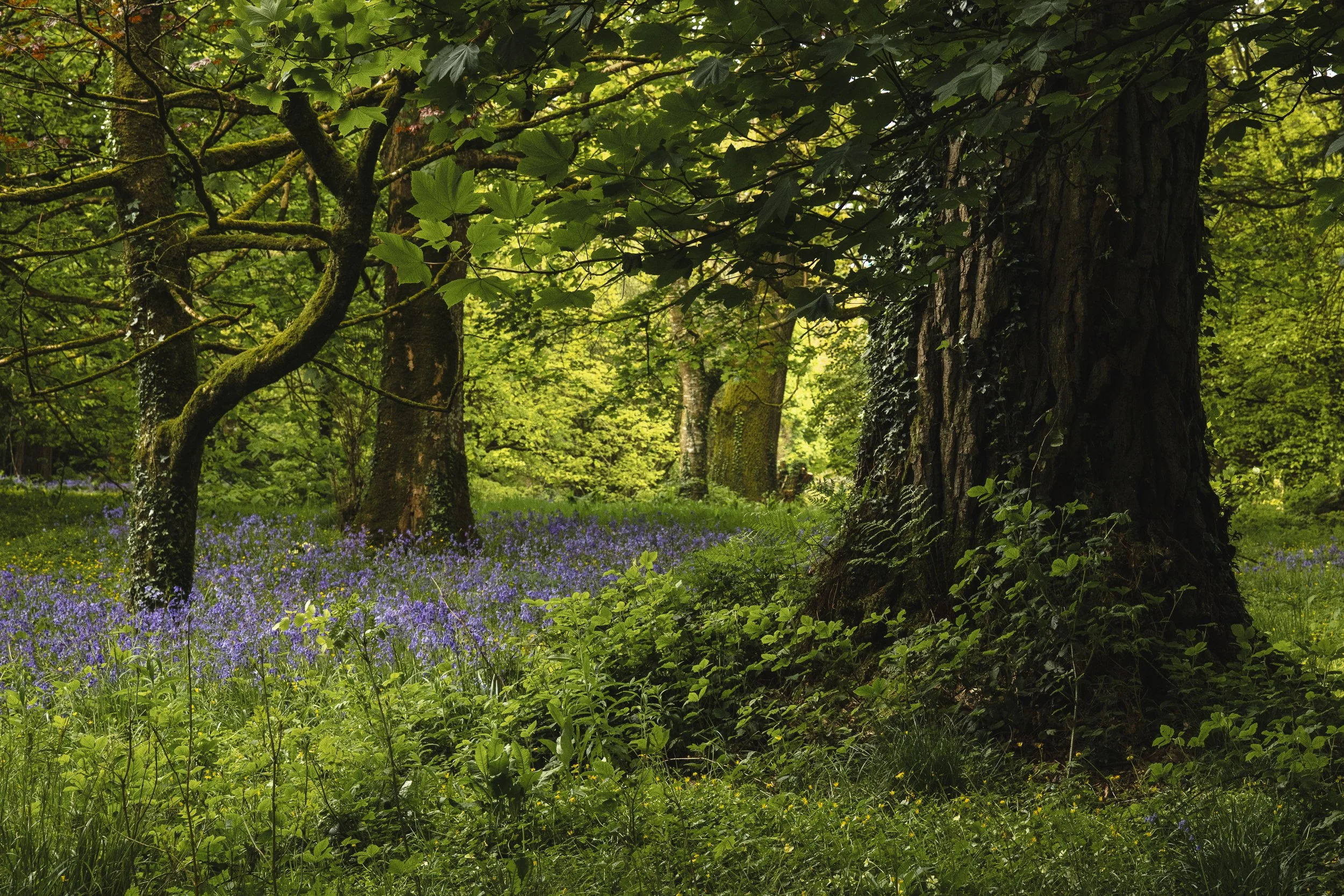
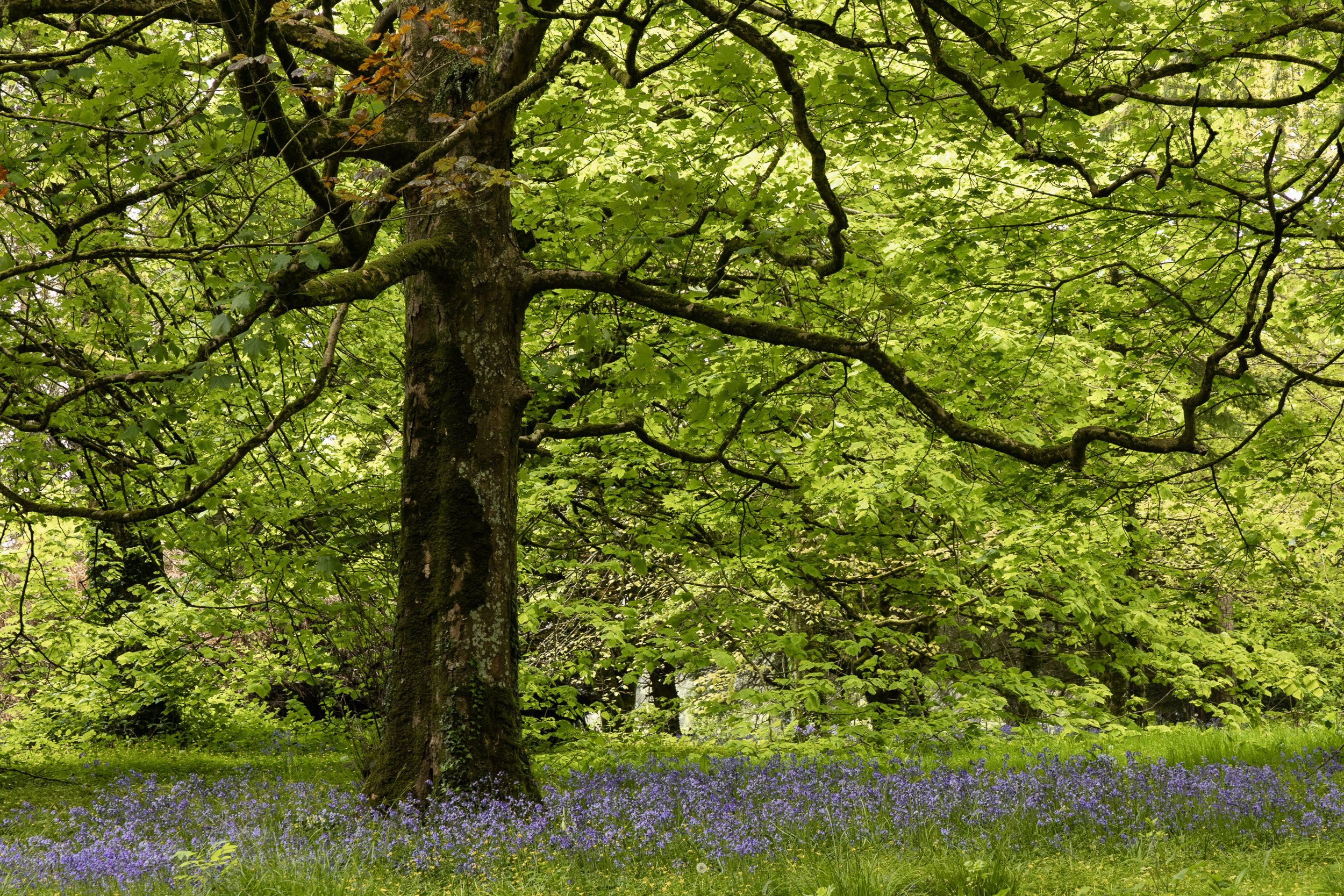
The light was different each time, softer and more subdued, and with the pressure of trying to create the bluebell photograph behind me, I found myself slowing down. Rather than searching for an entirely new scene, I worked around the same group of trees, moving only a few steps at a time, exploring how small changes in position altered the balance of the composition.
It was a reminder that some of the most rewarding moments in photography come when you’re completely absorbed in the scene before you. That quiet sense of being “in the zone” is something I enjoy as much as making the photograph itself.
By the third visit the woodland felt familiar. Instead of wondering where to point the camera, I could spend my time thinking about light, balance and the relationships between the trees and the flowers.
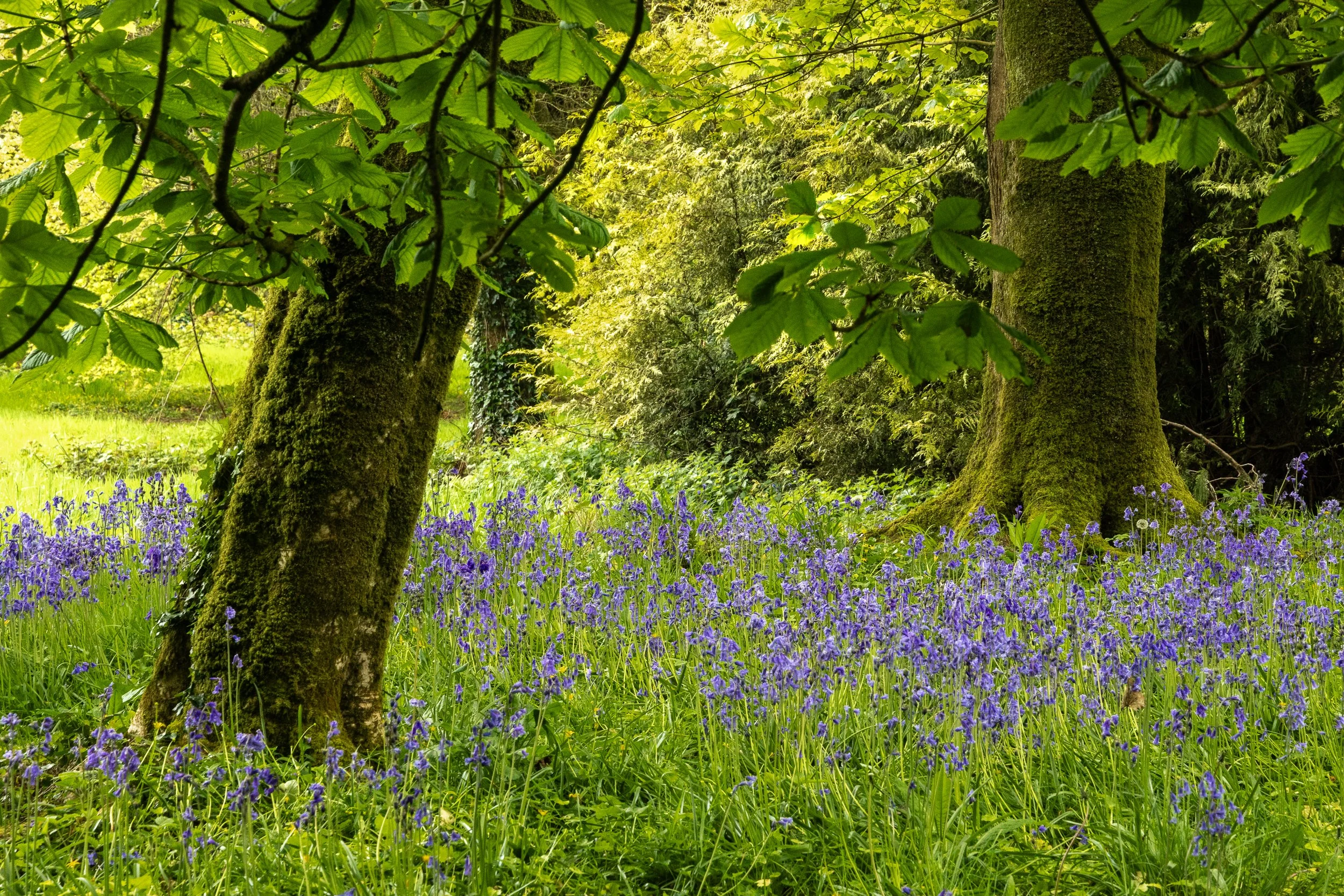
What have I learned? Looking back, the bluebells taught me far more than I expected. Planning helped me find potential locations, but it didn’t create the photographs. Those came from slowing down, returning without expectation and allowing the woodland to reveal its own possibilities.
I’ll certainly plan again next spring. But I’ll also continue taking the camera on ordinary walks, because sometimes the photographs we remember most are the ones we never set out to make.